
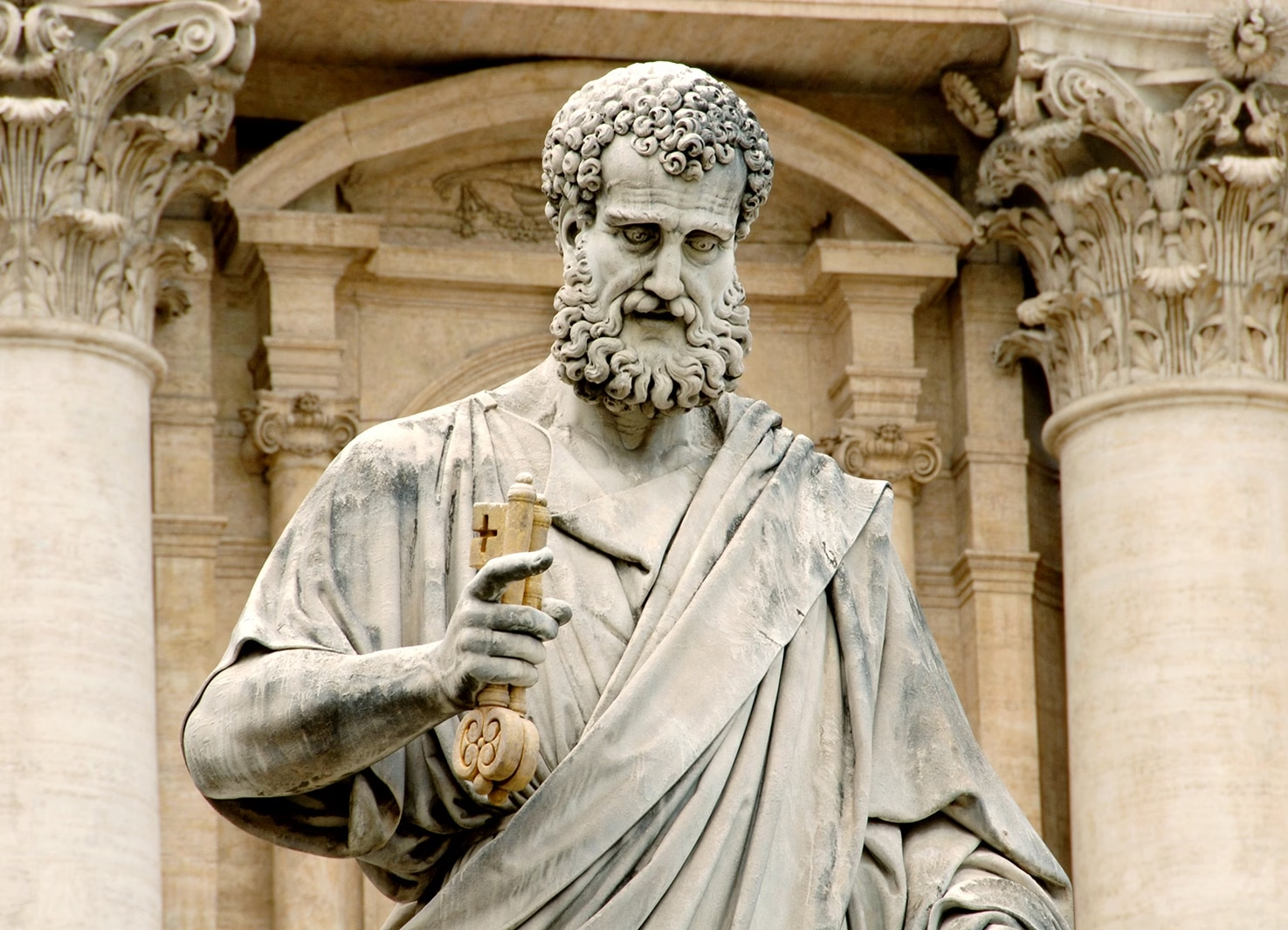
August 23, 2026; Matthew 16:13-20; 21st Sunday in Ordinary Time
In today’s Gospel, Jesus asks his disciples “Who do you say that I am?” Peter gives a good answer, “You are the Christ, the son of the living God.” But in the gospel next week, we will discover that Peter’s answer is incomplete. Jesus will criticize Peter for not having a full understanding of what being the Christ entails. Yet, although Peter is imperfect and Jesus knows this from the start, Jesus nevertheless chooses Peter as a disciple and gives him authority in the church. Even though Peter’s understanding of Jesus is flawed, Jesus trusts him and gives him a ministry anyway. Our relationship with Jesus is much like Peter’s. Our understanding is not perfect, and Jesus knows it. We do not fully comprehend who Jesus is and what Jesus expects of us. Yet, Jesus still chooses us to be disciples.
This truth leads to two important consequences. The first is, we must continue to grow. Precisely because our understanding is not complete, it is important to keep our understanding flexible, open, able to expand, so that we might see things more accurately. We might think that we have full understanding of the people who are closest to us, our children, parents, spouse, or friend. This is seldom the case. There may be talents and fears in our children that we have never seen. Our parents may have desires and dreams that we never noticed. Our spouse or a friend could have strengths that we have yet to discover. There is always more to be seen, and Christ may be preparing to introduce new aspects into our relationships. That is why we must always be open to grow.
We might think that we have a full understanding of what it means to follow Jesus. In part, we do. We know that being Jesus’ disciple involves living a moral life, worshipping God regularly, and treating others with justice and kindness. But do we see that we are also expected to speak up when we see the rights of other people being violated? Do we understand that following Jesus means that we are to extend special care to the least among us: to the unborn, to the immigrant, to the imprisoned, to the poor? No one of us has a complete understanding of what discipleship means. That’s why we must continue to grow.
Growing, however, is difficult. That leads to the second consequence of Peter’s story. God will help us grow. Our God does not call us, and then forget about us. God walks with us, helping us to see more clearly who God is and what God expects of us. We, like Peter, proclaim Jesus as the Christ, the son of the living God. Yet our understanding remains imperfect. That is why it is good news that our God goes with us, so that our understanding of God’s will may increase.
Dont believe what your eyes are telling you. All they show is limitation. Look with your understanding. Find out what you already know and you’ll see the way to fly.
Jonathan Livingston Seagull