
March 1, 2026; Mathew 17:1-9; 2nd Sunday of Lent
Every year on the second Sunday of Lent we hear an account of Jesus’ transfiguration either from Mathew, Mark, or Luke. We have just heard Mathew’s version. In the transfiguration, Jesus takes his disciples up a high mountain and is glorified in their presence. His clothes become as white as light. In every account, Peter has the same idea. He wants to set up tents on the mountain so that they can stay there and bask in the glory of Jesus. But every year at the end of the gospel we hear that the disciples are coming down from the mountain, returning to their normal lives. Wouldn’t it be wonderful if we could live on the mountain with Jesus, if we could bask in his glory and embrace in his presence? But we cannot. We must live in a complex, messy, and violent world.
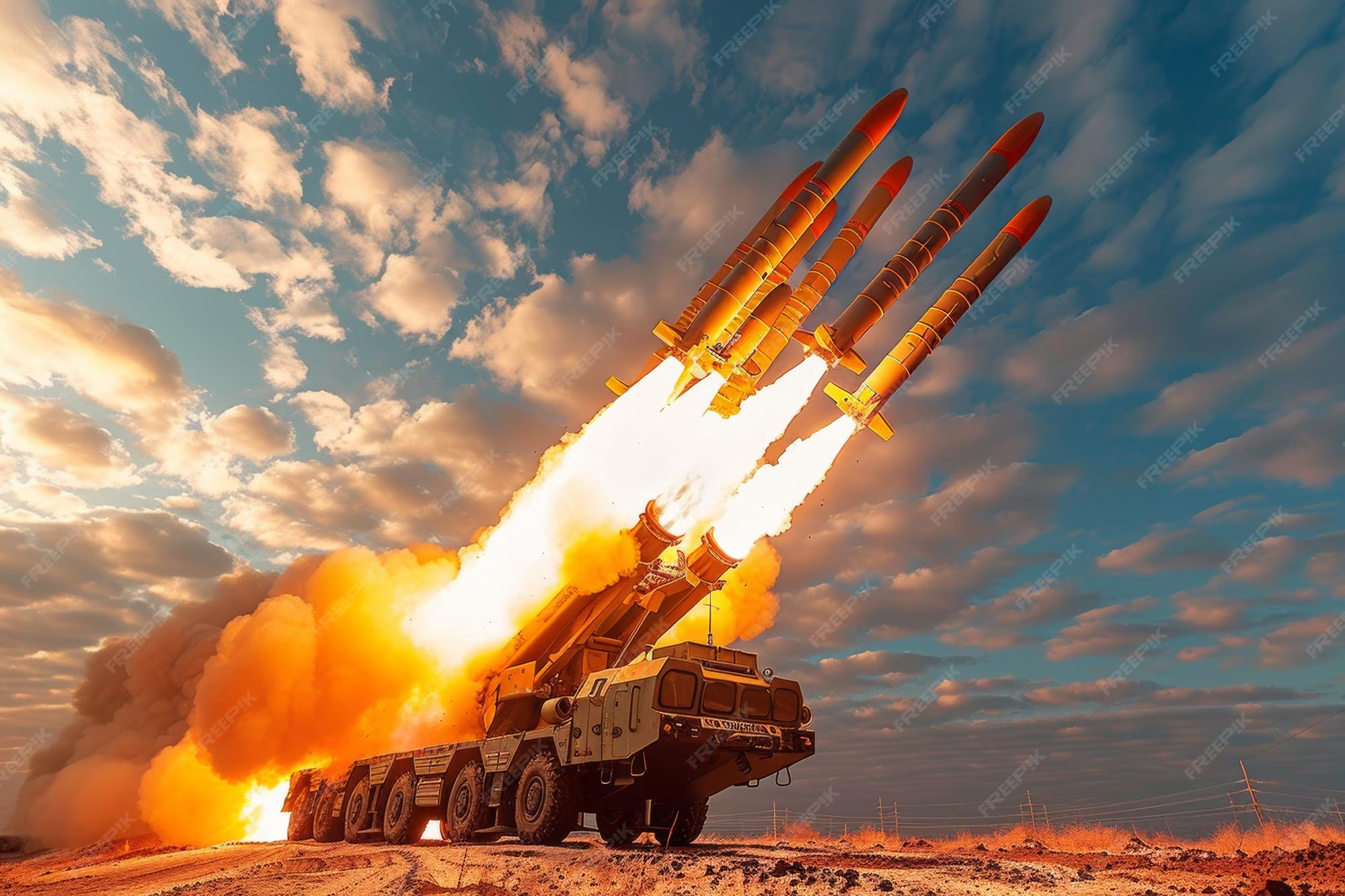
This truth was driven home yesterday when we heard that our country had begun a military attack against Iran to change its political regime. Iran has responded militarily. The warfare has begun, and we are not sure how long it will last. Whether it is wise politically or militarily to attack Iran is a question that is way above my pay grade. But as a priest and theologian, I feel compelled to address this issue, because we cannot live on the mountain. We must live in a complex, messy, and violent world.
Allow me, then, to present two thoughts in light of our present conflict with Iran. The first is this. Warfare should not be glorified. We all have seen movies that glorify war and the victory of war. Heroic men and women use military force to destroy an evil power. It is important for us to realize that what began yesterday is not a movie. It involves real violence between real people. We must not forget that. A hundred and fifty years ago the American Civil War General, William Tecumseh Sherman, addressed a graduating class of cadets who were ready to embrace the glories of military victory. Sherman was determined to warn them that their romantic view of warfare was an illusion. Here are his words: “You cannot qualify war more harshly than I do. War is cruelty, and you cannot refine it. War is hell.” General Sherman would admit that war cannot always be avoided. But he refused to glorify war. He insisted that we should not boast or take pride in the violence that wars unleash.
Here is the second thought. We believe in the sanctity of every human life. We as Catholics are committed to protect life from the womb until natural death. So, when death occurs in warfare, we see it in personal terms. For us, a death in battle is not a “military casualty.” It is a person—a person who lived and enjoyed family and friends as we do. Because we believe in the sanctity of life, we must insert our voice into the public debate around this conflict. We should be the voice asking, “Is there another way we can do this? How will we protect life? Can we find an off ramp to peace?”
You know as well as I do how easy it is to flip the remote control from a news program on the war to a comedy special, to forget what is going on seven thousand miles away and enjoy a pleasant dinner with friends. But this conflict with Iran is something that deserves our attention. We cannot live on the mountain. We must take our courage and our faith in Jesus and live in the complex, messy, and violent world that is ours.
Father George, I appreciate your educated thoughts on the reality that we live in today. So many of us are terribly saddened and frustrated with the world that we are made to endure with the current administration in our country. We pray and pray for a peaceful country and world. Sometimes we even become angry with God and feel that he doesn’t listen and respond to our prayers.
Thank you for not keeping still!