
April 5, 2026; John 20:1-9; Easter Sunday
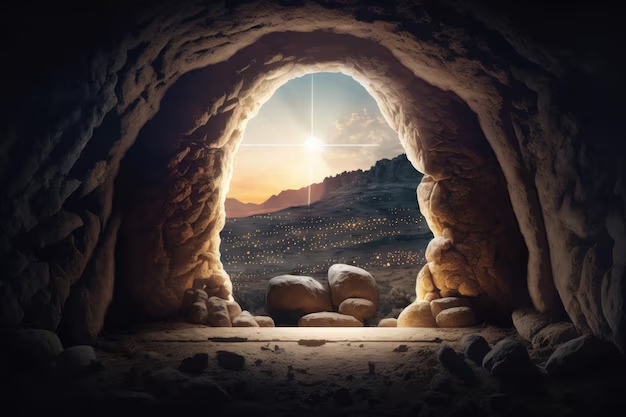
Some of the gospels give us a description of the risen Jesus. But all of the gospels show us the empty tomb. At the beginning of each Easter account, the disciples who saw where Jesus was buried return and find that his body is no longer there. The gospels show us the empty tomb in order to pose a question to us. It is the first question of Easter and the most fundamental question of our faith: Why is the tomb empty? And like the first disciples, we can answer that question in two very different ways. We can answer that question in a way that is logical and we can explain. Or we can answer that question as a mystery beyond our imagining.
Mary Magdeline in today’s gospel chooses the first option. When she sees the empty tomb, she runs to Peter and the beloved disciple and says “The Lord has been taken from the tomb, and we do not know where they put him.” Mary’s explanation of the empty tomb makes sense: the body is no longer there because someone moved it. The beloved disciple responds differently. When he sees the empty tomb, he believes that something has happened beyond his imagining. He believes that God has raised Jesus up. The beloved disciple sees the empty tomb with the eyes of faith. He believes that Jesus is no longer in the tomb because God has stepped into history to save us.
You and I, on a regular basis, must decide how to interpret the issues of our lives in one of the two ways which the disciples used to explain the empty tomb. Do things happen to us in our lives in ways we can explain, or do we see in the flow of our lives the mysterious presence of God?
When we meet the person we will love for the rest of our lives, when we land the job we always wanted, when the doctor tells us the cancer is not longer present, do we see these happenings as the result of good luck and some wise decisions on our part or do we attribute them to the power of God acting in our life? When our job is terminated because of downsizing, when we lose a close friend in an automobile accident, when the doctor tells us the cancer has returned, do we shrug and say, “That’s just the way life is” or do we hope that God is still with us, guiding us in ways we do not fully understand?
Each day of our lives, we face the same question that the first disciples faced on Easter morning. Are the events of our life unfolding in a way we can explain, or is God active in a mysterious way beyond our imagining? The first choice is logical. The second choice is an act of faith. The beloved disciple embraced that faith when he saw the empty tomb. On this Easter morning, we are invited to follow his example, and make that faith our own.